Saturday, April 28, 2012

MEGA PIRANHA


WELL, LADIES, THERE'S NOTHING NOT TO LIKE ABOUT THIS ONE!

Mega Piranha is a 2010 release, the brainchild of writer/director Eric Forsberg.  It's 92 minutes of SHEER FUN.  It stars Paul Logan and someone named Tiffany, no last name.  The story begins when a boat full of fat, drunken men and their topless female companions, cruising on what the Shaved Monkeys call the Orinoco River, are consumed by SOMETHING TERRIBLE that sinks their boat by nibbling on it from the underside.  Even someone who showed up late and missed the opening credits will recognize the menace immediately:  GIANT, KILLER PIRANHAS. WILL ANYONE SURVIVE?

CLIFFIE'S NOTES ON THIS REMARKABLE EFFORT:

>> Logan's character is a Special Ops guy sent south of the border to investigate what seems to have been the explosion of a boat occupied by some sort of government bigwig. YOU HAVE TO LIKE THE FACT that his character's name is "Fitch," which is approximately the way Spanish speakers pronounce my favorite word in English, "Fish."  (Yes, they're in Brazil, but everyone there speaks Spanish.  Onwards.)  Logan succeeds at every moment in exuding pointless, steely-eyed intensity, whether he is introducing himself to an airport employee, driving a hatchback down a dusty road, or madly bicycling his legs in the air to deflect a flurry of GIANT, KILLER PIRANHAS.

>> Logan's character was sent on this terrifying mission by a government lackey played by none other than Barry Williams.  You may remember him as Greg from The Brady Bunch.  Williams succeeds at every moment in exuding mild bafflement as he barks into a cellphone at our musclebound hero.  What I especially like about him is the way he just yaps on and on about what is supposedly a top-secret mission, no matter where he is or who's standing nearby.  Is there a cab driver listening in?  Is Williams standing in the middle of a gaggle of panhandlers at the airport?  Is a detachment of low-level military personnel without security clearance goldbricking nearby and taking in every word?  TELL THEM EVERY DETAIL, BARRY.

>> Tiffany's character is extra awesome.  A scientist sent to the Orinoco to create bigger, faster, tougher Piranhas, she apparently also has PSYCHIC POWERS.  I know this because when Logan deposits a deceased GIANT, KILLER PIRANHA onto her workbench, she peeks into a tiny centimeter-deep slit on the underside of the victim and, without ANY ability to see what's in there, announces that the fish has triple-thick skin and three hearts, plus full equipment to produce a batch of fertile roe every few hours, without the fuss and bother of mating.  This weaponry is all news to her, although she just got through explaining that she was the one who created this new species.  What she never explains is why she might have decided to do such a thing in the first place.  I'm not that surprised; at every moment she exudes tiredness and disshevelment, with her hair going every whichaway, looking like she put on someone else's clothes that morning by mistake.  The scary thing is that she makes more sense than the whole rest of the scientific team put together.

>> The stars of the show, of course, are the GIANT, KILLER PIRANHAS.  They get as big as hot-air balloons in the course of a day or so in this story, and they like to fling themselves at people and buildings.  Whenever they penetrate the side of a warehouse or apartment complex, the whole place BLOWS UP, so maybe the fish themselves are rigged to explode.  If you bomb them, poison them or anything else, IT JUST PISSES THEM OFF.  One of the incoherent scientists on Tiffany's team explains that bombing them will cause "reproductions."  Um, OK.  The only solution?  DROWN THEM.  That's what I said.

>> This, in short, is just what humans expect of our operatives.  They expect us to eat them for lunch. And not just the humans themselves -- also their buildings, Navy destroyers, underground bunkers, pleasure boats, power plants and helicopters.  Because they think that's what fish want.  

>> Oh, and did I mention the GIANT, KILLER PIRANHAS can SWIM REALLY FAST?  The scientific team generates a computer model of the menace's epidemic spread, showing that within 3 days, at their current rate of growth, the killer fish will make it all the way to OHIO.   Can the total destruction of the Midwestern auto industry be far behind?

In short, ladies, this is the PERFECT FILM to conceal our real operations from prying human eyes.  While we make ourselves smaller, more numerous, more physically harmless, and more difficult to distinguish from Shaved Monkeys, they are anxiously scanning the horizon for maneaters as big as school buses, gnashing their teeth as they fly through the air at their doomed, screaming victims.  

I CANNOT RECOMMEND IT TOO HIGHLY. 

Labels: , , ,

Monday, June 08, 2009

Johann Hari: Could we be the generation that runs out of fish?


The process of trawling is an oceanic weapon of mass destruction


Friday, 5 June 2009


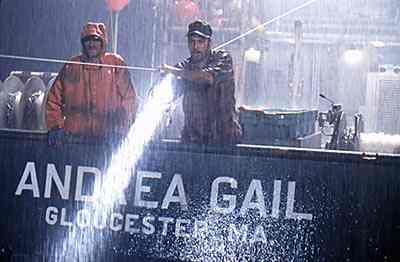
In the babbling Babel of 24/7 news – where elections, bailouts and beheadings blur into one long shriek – the slow-motion stories that will define our age are often lost. An extraordinary documentary released next week, The End of the Line, forces us to stop, and see. Its story is stark. In my parents' lifetime, we have killed 90 per cent of the world's fish. In my lifetime, we will finish off the rest – unless we change our ways, fast. We are on course to be the people who wiped fish from the earth.


The story begins in the sleepy Canadian resort of Newfoundland. It was the global capital of cod, a fishing town where the scaly creatures of the sea were so abundant they could be caught with your hands. But in the 1980s, something strange happened. The catches started to wane. The fish grew smaller. And then, in 1991, they disappeared.


It turned out the cod had been hoovered out of the sea at such a rapid rate that they couldn't reproduce themselves. But the postscript is spookier still. The Canadian government banned any attempts at fishing there, on the assumption that the few remaining fish would slowly repopulate the waters. But 15 years on, they haven't. The population was so destroyed that it could never recover.

A growing number of scientists are warning that we could all be living in Newfoundland soon. Professor Boris Worm of Dalhousie University published a detailed study in the prestigious peer-reviewed journal Nature saying that at the current rate, all global fish populations will have collapsed by 2048. He says: "This isn't some horror scenario, it's a real possibility. It's not rocket science if we're depleting species after species. It's a finite resource. We'll reach a point where we run out."


The species in the frontline is bluefin tuna, the pinnacle of the evolutionary chain for fish. This little creature can swim at 50mph, and accelerate faster than the swishest sports car. It has even developed warm blood. Yet every year, a third of the remaining population is ripped from the seas and slapped onto our plates. Soon, it will be gone.


All over the world, from the Bay of Bengal to Lake Victoria to the shores of South America, I have heard fishermen say their catches are shrinking, in size and in number. Industrial-scale fishing only began in the 1950s. By the standards of the news cycle, this is slow – but by the standards of the planet or of settled fishing communities, this is a click of the fingers. The effects of the new industrial fishing are uniform. Professor Ransom Myers found that whenever the vast industrial trawlers are sent in, it takes just 15 years to reduce the fish population to a 10% shadow of its former self.


This process of trawlering is an oceanic weapon of mass destruction, ripping up everything in its path. Charles Clover, who wrote the book on which the documentary is based, has a good analogy for it. Imagine a band of hunters stringing a mile of net between two massive all-terrain vehicles and dragging it at speed across the plains of Africa. Imagine it scooping up everything in its way: lions and cheetahs and hippos and wild dogs. The net has a massive metal roller attached to its leading edge, smashing down every tree that gets in its way. And in the end, when the hunters open up the net, they pick out the choicest creatures and dump the squashed remains in the sun as carrion for the vultures.


But we need fish. Our brains don't form properly without their fatty Omega-3 acids. So why do our governments allow this process of destruction to continue? Why do they actively encourage it, with $14bn of subsidies for fishermen to keep on trawling every year?


A small number of people are making a lot of short-term profit out of this destruction – and they are using this cash to ensure they can carry on hunting, down to the last fish. In 1992, an attempt to get the bluefin tuna listed as an endangered species was scuppered by the US and Japanese governments at the urging of the tuna lobby – who happen to give large campaign donations to all parties. A similar corruption has eaten into European politics.


Add to this the fact that fishermen are a determined and demanding constituency with an equally short-term agenda. They demand the maximum quotas today – even if that means no quotas tomorrow.


Our societies are structured to put these short-term cries for money for a few ahead of the long-term needs of us all. A small determined group with hard cash almost always beats a diffuse group with good intentions – until they get angry and fight back.


Yet today, ordinary people in rich countries are being insulated from the fish crisis. As we exhaust our own fish stocks, our corporations are sailing out across the world to steal them from the poor. Today, there are armadas of industrial European and American fishing boats across the coast of West Africa, leaving the small fishermen who live on its coasts to starve. Professor Daniel Pauly says: "It is like a hole burning through paper. As the hole expands, the edge is where the fisheries concentrate, until there is nowhere left to go."


We are not only stealing fish from Africans; we are stealing them from future generations. In the age of limits, we are hitting up against the capacity of the planet to provide for us – yet we are reacting with blank denial. This story is unfolding, in one form or another, in the rainforests, the air, and in the planet's climate itself.


It has left us at a strange crossroads. We will either be a despised generation who left behind a depleted husk-planet – or a heroic generation who, at five minutes to ecological midnight, turned back to the light.


With fish, the solution is even simpler and more straightforward than with the other ecological crises ensnaring us. The scientific experts say we need to follow two steps. First, expand the 0.6 per cent of the area of the world's oceans in which fishing is banned to 30 per cent. In these protected areas, fish can slowly recover. Second, in the remaining 70 per cent, impose strict quotas on fishermen and police it properly, as they do in Alaska, New Zealand and Iceland.
The cost of this programme? $14bn a year – precisely the sum we currently spend on subsidising fishermen. At no extra cost, we could turn them from the rapists of the oceans into their guardians.


Yet The End of the Line has one flaw – and it is one that riddles current environmental thought. It presents us with a great earth-altering crisis, and then says our primary response should be to change our own personal consumption habits. It urges people not to buy from Nobu, which shamefully still sells bluefin tuna, and to ask if the fish we buy is sustainably produced. It's like the end of An Inconvenient Truth, where the primary response Al Gore presses on us is to shop green and change our lightblubs.


Of course this is valuable – but it is only an anemic and minor first step. It is rather like, in 1937, reacting to the rise of Nazism by urging people to make sure that they personally weren't killing any Jews or gays or Jehovah's Witnesses, or buying from any Nazi-owned companies. We needed collective action that would stop other people from killing these minorities – just as today we need collective action that prevents anyone from irreparably trashing the means of life.


At the moment, many good people get anxious about environmental issues, and hear the message that The Response is to scrub their own lifestyle clean. Yet individual voluntary action by a minority of nice people will not save the bluefin tuna, never mind the ecosystem. But if all these honourable people act together – by volunteering for, and donating to, organizations like Greenpeace, Friends of the Earth and Plane Stupid – they can change the law, so everybody will be required to change their behaviour, not just a benevolent 10 per cent. It was just such determined minorities armed with the facts that spurred the fights against slavery, colonialism and fascism. When you respond as a consumer, you are weak; when you respond as a citizen, you are strong.


The voice of millions of people can drown out the concentrated power of the fishing industry – and all the other industries with a vested interest in trashing our planet – but not with the swipe of a credit card.


The alternative to collective action today is catastrophe tomorrow. As Charles Clover explains: "When the human population comes under pressure on land because of global warming, when we are running out of ways to feed ourselves, we [will] have just squandered one of the greatest resources on the planet – wild fish." The epitaph for the human species would turn out to have been scripted by Douglas Adams: so long, and thanks for all the fish.
~
Yeah, YOU WISH. We will NEVER leave you in peace.

Labels: , ,